
Civil Engineering
Civil engineering involves the planning, design, construction, and operation of facilities and systems that are essential to modern life and infrastructure.
Civil engineers create and manage bridges, highways, buildings, airports, dams and waterways, water purification plants and distribution systems, foundations and tunnels, waste treatment and disposal facilities, and conventional and renewable energy supply systems.
Accreditation
The program leading to the Bachelor of Science degree in Civil Engineering is accredited by the Engineering Accreditation Commission of ABET, under the commission’s General Criteria and Program Criteria for Civil Engineering.
What Do Civil Engineers Do?
Strengths of the Program
- Hands-on, experience-focused curriculum
- High job-placement rates at all degree levels
- Senior capstone design course gives you direct engineering experience before graduation
- Award-winning and engaging faculty who collaborate with industry and government partners
- Graduates will be ready to obtain a Professional Engineering license
- Join WSU’s chapter of the American Society of Civil Engineers to network with professionals, attend regional or national conferences, and participate in contests
Student Spotlights

Student Spotlight: Betty Mitchell
Betty Mitchell is a civil engineering major graduating in December 2026.

Student Spotlight: Brandon Swinger
Brandon Swinger is a civil engineering major graduating in Fall 2028.

Student Spotlight: Connor Reschke
Connor Reschke is a civil engineering major graduating in Fall 2026.

Student Spotlight: Maya Olson
Maya Olson is a civil engineering major graduating in December 2026.
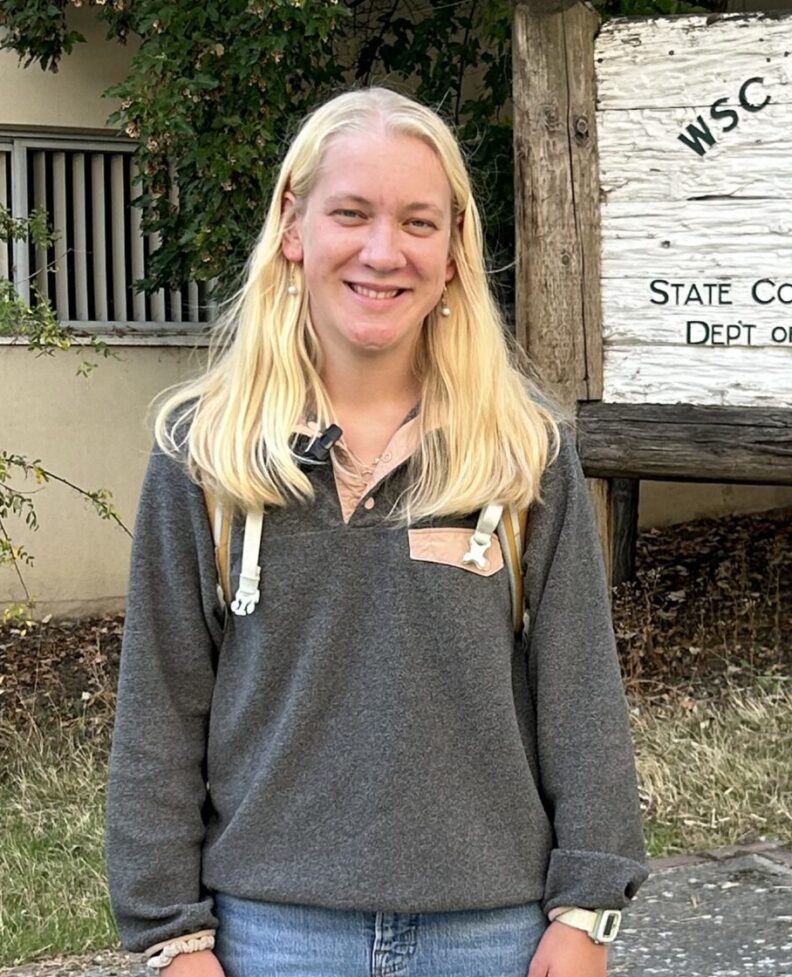
Student Spotlight: Ellinor Sonnichsen
Ellinor Sonnichsen is a civil engineering major graduating in December 2026.

Student Spotlight: Lance Lael
Lance Lael is a civil engineering student graduating in December 2026.

Student Spotlight: Noah Lindblom
Noah Lindblom is a civil engineering student graduating in May 2025.

Student Spotlight: Erin Waligorski
Erin Waligorski is a civil engineering student graduating in December 2025.
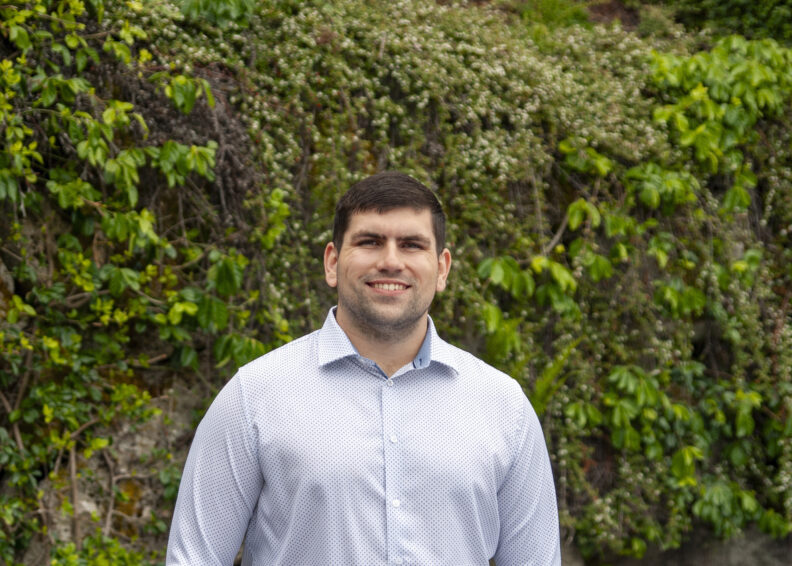
Student Spotlight: Matthew Wethington
Matthew Wethington is a civil engineering student graduating in December 2024.
Specialization Tracks
Several specialization tracks are offered for the Bachelor of Science degree in Civil Engineering.
Civil/Construction Engineering
Construction engineering involves the planning, design, construction, and operation of large facilities and systems that are essential to modern life and infrastructure, such as bridges roads, and tunnels.
Environmental Engineering
Environmental engineers use engineering principles and design to solve problems for a wide variety of environmental concerns. From cleaning up hazardous waste to designing wetlands to producing “green” products, environmental engineers literally work to make the world a better place.
Infrastructure Engineering
The field of infrastructure engineering deals with understanding and improving the capacity of soil to support the weight of our nation’s infrastructure and the various human and material design aspects of transportation facilities including traffic, geometrics, planning, pavements, and materials.
Structural Engineering
As tomorrow’s structural engineers, students will face the challenge of providing safe and economical structures for a changing society. They must simultaneously maintain and improve the aging infrastructure, increase the efficiency in utilization of construction materials, and plan for and design tomorrow’s built environment.
Water Resource Engineering
Water resources engineering is the study of technologies that supply water. By designing, evaluating, and promoting appropriate technology, water resource engineers address the challenges of growing demand, declining quality, aging infrastructure, and increasing competition for limited water resources.
Curriculum
Each student’s program is tailored to meet the needs and interest of the student. The curriculum emphasizes a combination of classroom and laboratory education with computer-aided design and analysis. The department maintains a micro-computer laboratory for undergraduate use.
In addition to the classroom education, students can gain additional experience through various activities sponsored by an active student chapter of the American Society of Civil Engineers.
- Curriculum Schedule (UCORE)
Schedule of required courses, semester by semester. Includes schedules for specialization tracks.
Locations
The Bachelor of Science degree in Civil Engineering is offered on the WSU Pullman campus and at WSU Tri-Cities.
Academic Advising
Undergraduate advisors can help you evaluate career options and discuss academic concerns.